


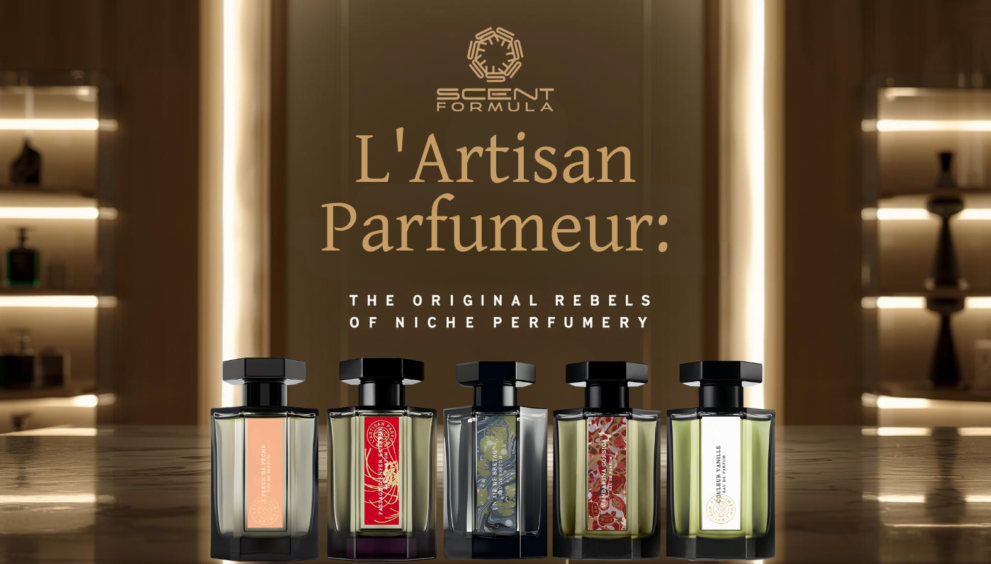
L’Artisan Parfumeur: The Original Rebels of Niche Perfumery

Imagine being in a busy city like Singapore, surrounded by many glass bottles in stores. Each bottle seems to offer luxury but smells the same. Then, you see a small, special boutique. A single spray of a new scent takes you to a rainy forest or a sunny garden. This is what L’Artisan Parfumeur is all about.
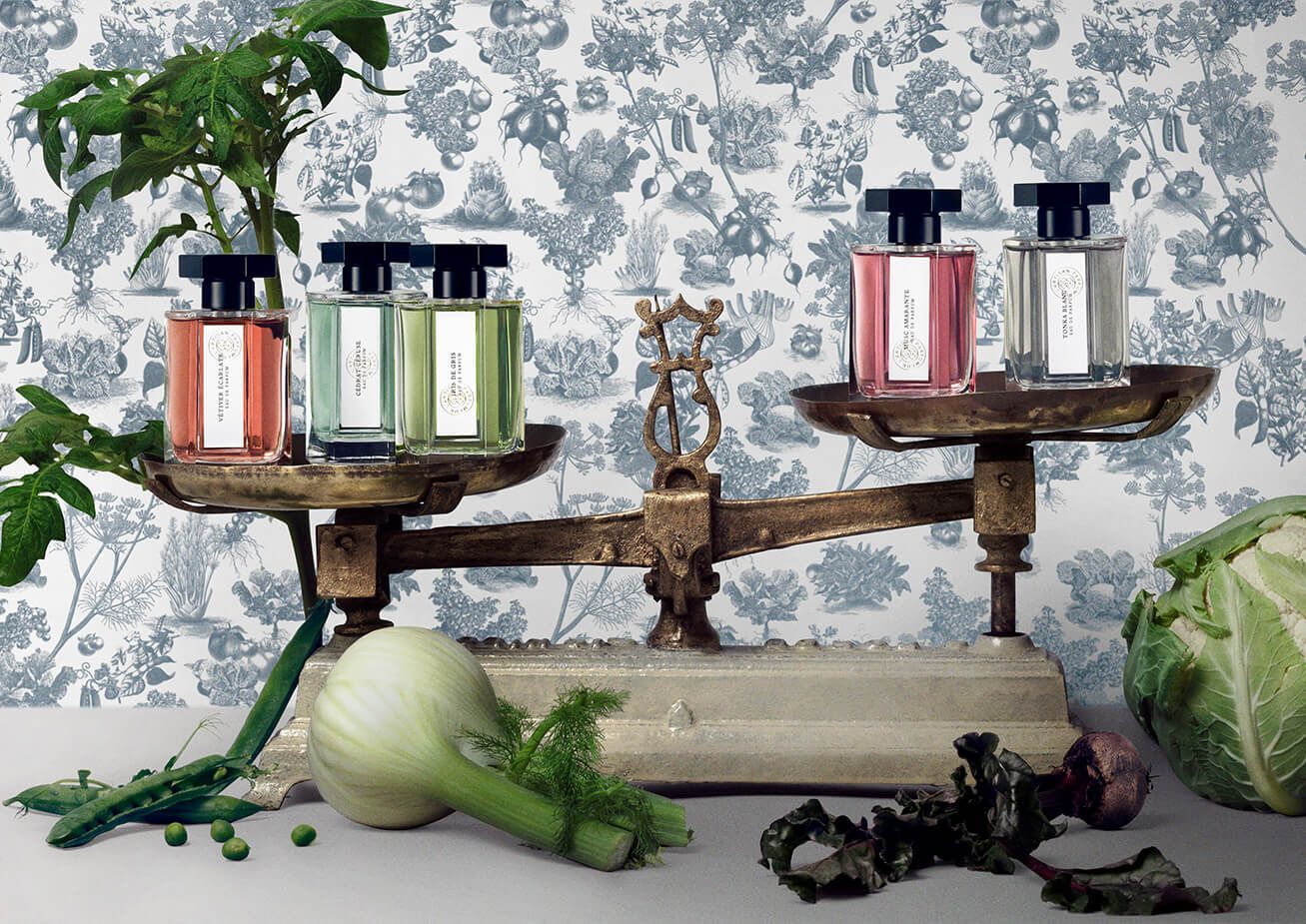
In the 1970s, when most perfume was the same, this French brand stood out. They went back to the old days when perfumes were made for the rich. Their goal was to capture moments and memories from nature.
They believe in making unique and meaningful scents. Their perfumes are not just smells; they are stories that connect with your life. They value the art of making scents over mass production.
Key Takeaways
- The brand was a pioneering force in the niche perfumery movement.
- Its philosophy rebels against mass-produced, commercial fragrances.
- Inspiration comes from historical artisans and the raw beauty of nature.
- Creations are designed to be highly personal and trigger emotion.
- The focus is on artistry, authenticity, and exquisite olfactory discovery.
- It offers a bold alternative for those seeking a unique scent identity.
The 1976 Revolution: How a Parisian Atelier Changed Perfume Forever
Imagine a time when most perfumes smelled the same. Then, a rebel with a chemist’s precision and an artist’s soul came along. The year 1976 was a turning point. In a small Parisian atelier, a quiet but significant change started. This change would forever change luxury fragrance.
The 1970s perfume world was stuck. Celebrity-driven scents dominated. People yearned for something real and authentic. That’s when L’Artisan Parfumeur stepped in.
This brand didn’t just introduce new scents. It introduced a new way of thinking. It saw the perfumer as an artist, not just a technician. This was the start of what we now call ‘niche’ perfumery.
Jean Laporte: The Founder’s Rebellious Spirit
At the heart of this olfactory innovation was Jean Laporte. A trained chemist with a passion for raw materials, Laporte was fed up with commercial perfumes. He saw them as too similar and synthetic.
He had a different vision. He believed a fragrance should tell a story, evoke memories, or capture a place. It should be personal and artistic, not mass-produced. This rebellious spirit defined the brand from the start in 1976.
“Perfume should be an intimate journey, a signature of one’s personality, not a uniform worn by millions.”
Reflecting the philosophy of Jean Laporte
Laporte’s approach was hands-on and experimental. He searched for rare ingredients and treated them with respect. This focus on quality and originality set a new standard. It made the founder not just a businessman, but a guardian of an art form.
| Aspect | Jean Laporte’s Vision (1976) | Traditional 1970s Perfumery |
|---|---|---|
| Core Philosophy | Artistic expression, personal signature | Mass-market appeal, broad commercial success |
| Ingredient Focus | Rare, natural raw materials, olfactoryauthenticity | Cost-effective synthetics, consistent & stable formulae |
| Creative Control | Perfumer as autonomous artist | Driven by marketing committees and trends |
| Distribution | Exclusive to own boutique, limited availability | Wide distribution in department stores globally |
Birth of a New Category: Defining “Niche”
What did it mean to be a ‘niche’ perfumer in 1976? It was about independence. The term described a house that valued artistic integrity over quantity. Its scents were made in small batches and sold in a single boutique.
This model was groundbreaking. It rejected the mass production of designer fragrances. Instead, it offered a perfumer’s pure vision to a select few. The focus was on the olfactory experience, not just a famous name on the bottle.
The birth of this category changed how we see scent and wearer. It was no longer just about buying perfume. It was about discovering a unique piece of olfactory innovation. It was about joining the perfumer’s creative world.
This earliest niche model introduced key principles still loved today:
- Creative Freedom: The ‘nose’ is the ultimate author.
- Limited Distribution: Scents are discoveries, not commodities.
- Focus on Ingredients: Quality of materials is paramount.
- Storytelling: Each fragrance has a narrative and a soul.
In a Paris atelier in 1976, a new path was carved. It was a path that valued the unique over the common. It placed the art of creation above all else, changing perfume forever.
L’Artisan Parfumeur: The Original Rebels of Niche Perfumery
Rebellion in perfumery isn’t always loud. Sometimes, it’s about creating scents that are true to their source. L’Artisan Parfumeur stands out as the original rebels. They focus on a different set of values for fragrances.
The Pursuit of Olfactory Authenticity
For L’Artisan Parfumeur, a great perfume tells a truthful story. They aim to capture moments, memories, or materials with clarity. They reject generic formulas for scents that feel personal and evocative.
This approach makes wearing perfume an experience. A scent might remind you of picking wild blackberries or enjoying a spiced tea by the fire. These real sensations inspire their creations. The result is a fragrance that feels exclusive and connected to a real experience.
They focus on authenticity by using exceptional raw materials and exploring unusual accords. This ensures each fragrance has a genuine soul and a unique perspective.
Collaborations with Visionary “Noses”
The brand’s vision is brought to life through collaborations with gifted perfumers, or “noses.” L’Artisan Parfumeurgives these artists the freedom to innovate. This trust attracts both legendary and contemporary talents.

By working with different noses for various projects, the house offers a diverse range of fragrances. Each perfumer adds their unique touch, leading to groundbreaking compositions that break new ground.
| Perfumer (“Nose”) | Notable Creation for L’Artisan Parfumeur | Signature Contribution |
|---|---|---|
| Olivia Giacobetti | Premier Figuier, Passage d’Enfer | Master of ethereal, airy textures; captured the soul of a fig tree with photorealistic precision. |
| Quentin Bisch | Recent collections for the brand’s modern evolution | Brings a contemporary, often unexpected twist to classic structures, known for his innovative use of materials. |
| Alexandra Carlin | Collaborations on contemporary floral and aromatic scents | Celebrated for her elegant, fluid style and ability to weave complex stories through scent. |
| Daphné Bugey | Various compositions within the collection | Known for her sophisticated and balanced accords, often highlighting natural beauty with a modern touch. |
This model is key to the brand’s identity. It’s a dialogue between the house’s poetic brief and the perfumer’s technical skill. Unlike big houses, here the perfumer is the author. This respect for the creator’s vision makes every bottle a piece of olfactory art with a unique signature.
This commitment to authentic inspiration and collaboration cements their rebel status. They show that the most powerful scents come from genuine creativity and artistic partnership.
Iconic Creations: The Scents That Defined a Movement
Every era in fragrance has its own special scents. For niche perfumery, many were born at L’Artisan Parfumeur. Their bottles tell stories of rebellion, innovation, and a quest for true smells.
These iconic scents didn’t just follow trends. They set new ones, changing what a perfume could be and how it should make you feel.
Mûre et Musc (1978): The Unexpected Berry Revelation
In 1978, the perfume world got a surprising wake-up call. Mûre et Musc showed blackberry as a real, sun-kissed fruit, not a synthetic candy.
This fragrance had a real blackberry scent, mixed with soft white musk. It was a game-changer. Perfume could smell this natural and true.
The success of Mûre et Musc showed people wanted real scents. It’s a landmark, offering comfort and a playful sweetness that’s timeless.
Premier Figuier: Capturing the Soul of a Fig Tree
If Mûre et Musc captured a fruit, Premier Figuier captured a whole ecosystem. Created in 1994 by Olivia Giacobetti, it didn’t just suggest a fig. It brought the whole tree to life.
You feel the creamy sweetness of the ripe fruit. Then, the green, sappy snap of the leaf. And finally, the dry, earthy warmth of the wood. It was the first true fig fragrance, setting a high standard.
Available as both an EDP and a lighter EDT, Premier Figuier is a lesson in botanical storytelling. It takes you to a Mediterranean grove with just one spritz.
A Legacy of Innovation: From Vanille to Timbuktu
The brand’s pioneering spirit didn’t stop with berries and figs. Their Vanille collection, especially Vanille Bourbon, changed gourmand perfumery. It offered a deep, resinous vanilla, far from simple sweetness, evoking memories and comfort.
Scents like Timbuktu showed a more exotic and spiritual side. Here, incense and myrrh mix with spicy pink pepperand a hint of orange blossom, creating a meditative, intriguing journey.
This spirit continues with their latest collections. Le Potager is a bold, avant-garde tribute to the vegetable garden, with scents for cauliflower, tomato, and green pea. Similarly, La Botanique explores rare and precious plant materials.
| Iconic Fragrance | Year Launched | Signature Notes | Olfactory Family |
|---|---|---|---|
| Mûre et Musc | 1978 | Blackberry, White Musk | Fruity Musk |
| Premier Figuier | 1994 | Fig Fruit, Fig Leaf, Fig Wood | Woody Fruity |
| Vanille Bourbon | Not specified | Bourbon Vanilla, Tonka Bean, Sandalwood | Gourmand Oriental |
| Timbuktu | 2004 | Incense, Myrrh, Pink Pepper, Karo Karoundé | Woody Spicy |
| Le Potager (Collection) | Recent | Vegetable Accords (e.g., Tomato Leaf, Green Pea) | Experimental Green |
From the unexpected berry of 1978 to the vegetable garden of Le Potager, L’Artisan Parfumeur’s collection shows the evolution of niche perfumery. Each bottle is a bold step off the usual path.
Decoding the Olfactory Palette: A Guide to Their Signature Notes
Exploring L’Artisan Parfumeur’s fragrances is like discovering a world of scents. This guide helps you understand the note profiles that make their fragrances special. Knowing these profiles lets you find scents that match your taste and skin.

The Depth of Woody and Amber Accords
L’Artisan Parfumeur’s fragrances often start with a rich base of woody and amber accords. These notes add warmth, last long, and feel like a second skin.
The woodiness comes from vetiver or sandalwood. In Vétiver Écarlate, vetiver is key, mixed with tomato leaf and ginger. This shows how wood notes can be fresh and exciting.
Amber accords add a resinous warmth, sometimes with a powdery feel. They’re often mixed with vanilla or incense. Adding white musk or leather makes the scent even more comforting and elegant.
The Spark of the Unexpected: Herbal, Spicy and Green Twists
L’Artisan Parfumeur is known for its bold top and heart notes. These aromatic, spicy, and green notes make their scents unforgettable.
Their herbal notes are especially creative. Cédrat Céruse starts with a burst of lemon-fennel and aniseed. Coriander adds a spicy touch that’s both refreshing and intriguing.
Green notes in their fragrances are unique. Vétiver Écarlate uses galbanum and tomato leaf for a fresh, crunchy feel. This adds a natural, vibrant quality.
Even their florals have an aromatic twist. Iris de Gris combines powdery iris with herbal and aromatic notes. This makes the flower note intellectually engaging.
In Singapore’s warm climate, their green and herbal accords are perfect. They offer a cool, airy feel with spicy and pepper notes. Whether you prefer woody vanilla or green accords, knowing these signatures helps you find a scent that’s uniquely yours.
The Art of Presentation: Bottle, Boutique and Sensory Journey
L’Artisan Parfumeur sees fragrance creation as just the start of a bigger story. They focus on every detail, from the bottle to the place you find it.
The bottle is a classic design, inspired by alchemist flasks. It highlights the fragrance inside. The packaging also tells a story. For example, the ‘Toile de Jouy’ boxes for Cédrat Céruse or Iris de Gris add a touch of artisanal beauty.

The brand’s focus on detail shows its exclusive nature. Many scents, like those in the Les Paysages collection, are only sold at its boutiques. The Paris flagship on Rue Saint-Honoré is where this journey begins.
From Paris to the World: The Personalised Discovery Process
The core of L’Artisan Parfumeur is the personalised discovery process. It’s a far cry from regular perfume shopping. In their boutiques, you embark on a journey with expert guidance.
Consultants listen to your likes and memories. They then help you through a selection of scents. It’s a slow, thoughtful process, not a quick spray.
The aim is to find a scent that feels special to you. There’s no rush, just a shared exploration. This turns buying a perfume into a unique journey of discovery.
This personalised approach, started in Paris, is now key worldwide. It makes every visit unforgettable, adding to your own scent story.
L’Artisan Parfumeur in Singapore: Finding Your Scented Signature
Singapore’s warm and humid weather needs a fragrance that’s light and airy. L’Artisan Parfumeur offers scents that are not heavy but enhance your day. Their collection is perfect for fragrance lovers in this tropical setting.
Curating for the Tropical Climate: Fresh, Airy and Lighter Scents
Singapore’s heat calls for refreshing scents, not heavy ones. L’Artisan Parfumeur creates perfumes that feel like a cool breeze. Their scents are fresh and airy, perfect for everyday wear.
Here are some standout aromatic choices from their collection:
| Fragrance | Signature Notes | Olfactory Character |
|---|---|---|
| Cédrat Céruse | Zesty citrus, sparkling bergamot, pepper | A vibrant, energising burst that feels like a crisp, cooling spritz. |
| Iris de Gris | Powdery iris, carrot seed, greenvetiver | A sophisticated, fresh floral with an earthy, clean dry-down. |
| Premier Figuier | Creamy fig, coconut, fig leaf, white musc | The iconic airy and milky scent of a sun-drenched fig tree. |

Explore herbal scents like L’Eau de L’Artisan or the green tea-like Thé pour un Été. Find a fragrance that feels like a second skin—light, comfortable, and uniquely yours.
Where to Discover and Explore in Singapore
Start your fragrance journey at authorised stockists that value niche perfumery. These places offer a personal service, letting you test scents on your skin. This is important as heat changes how a fragrance smells.
- High-End Department Stores: Check beauty halls in stores like Takashimaya or TANGS for a dedicated counter or selection.
- Specialist Beauty Retailers: Some Sephora locations, like the ION Orchard flagship, carry niche brands, including L’Artisan Parfumeur.
- Independent Perfume Boutiques: Visit boutiques in areas like Dempsey Hill or Holland Village for a guided discovery session.
When you visit, ask for samples or try different scents. Spray a citrus–aromatic on one wrist and a green, woody scent on the other. Wear them for a few hours to see how they change in our climate. This hands-on approach is the best way to find your scented signature in Singapore’s vibrant landscape.
Conclusion
L’Artisan Parfumeur’s journey is a quiet but powerful change. It started in a Parisian atelier and changed the luxury fragrance world. Today, it stands as a true champion of niche perfumery.
Its fragrances are more than just scents; they are olfactory masterpieces. Made through teamwork with top perfumers, they offer bold and new smells.
Perfume tells personal stories and brings back memories. A beautiful scent can unlock these moments. It’s like a key to your past.
Now, you’re invited to explore this world of scents. Try the creations of the original rebels for yourself. Find your own signature fragrance in Singapore.
Learn more about the L’Artisan Parfumeur: Pioneers of Creative Niche Fragrance at Scentformula.
Frequently Asked Questions
What makes L'Artisan Parfumeur's fragrances so different from mainstream perfume collections?
L'Artisan Parfumeur has always leaned into creative freedom — think unexpected ingredients, artisanal techniques and a willingness to be a little rebellious. Their collection focuses on storytelling and olfactory artistry rather than mass-market trends, so each scent feels like a fragrant snapshot of a memory, place or idea rather than just another sweet or musky bottle on a shelf.
How can I discover the world of L'Artisan Parfumeur without buying full bottles?
Start with samples, travel sprays or discovery sets — many boutiques and online retailers offer sampler packs. You can also visit concept stores or fragrance events where you can test multiple eaux de parfum and eaux de toilette side by side to find what resonates. This is the best way to discover the world of their varied creations without committing to a full bottle.
What does "eau de" mean on L'Artisan Parfumeur labels and how does it change the scent?
"Eau de" is shorthand for concentrations like eau de parfum or eau de toilette. It indicates how much aromatic oil is in the formula: higher concentration usually means longer lasting and stronger projection. L'Artisan uses these concentrations thoughtfully to present each composition — sometimes a lighter eau de toilette highlights fresh top notes, while an eau de parfum deepens the base for a more intimate, long-lasting experience.
What's the story behind "Le Potager" and how does it fit into the la botanique and les paysages themes?
Le Potager is inspired by kitchen gardens and earthy vegetation, so it sits comfortably within la botanique and les paysages — imagining landscapes through plants and soil. The scent often blends green, herbaceous notes with mineral or earthy facets to create a fragrant homage to cultivated nature, evoking both the smell of fresh leaves and the broader outdoor scenery.
Are there any signature ingredients or themes I should look for when exploring their collection?
L'Artisan Parfumeur is known for using unusual raw materials and highlighting naturalistic themes — woods, herbs, spices, florals treated in an unexpected way. Look for perfumes that emphasize botanical facets (la botanique), rustic landscapes (les paysages), or crafted gardens (le potager). These motifs often signal the brand's artistic approach and fragrant storytelling.
Is L'Artisan Parfumeur suitable for people who prefer subtle scents rather than loud perfumes?
Absolutely — many compositions are more contemplative than aggressive. While some pieces can be bold, a lot of the line favors nuanced, skin-like wear. Try an eau de toilette concentration or test on skin to see how it opens and settles; their quieter, more intimate pieces are perfect if you like something elegant and not overpowering.
How does L'Artisan Parfumeur pay homage to tradition while still being rebellious?
They honor craft and quality — using skilled perfumers and fine ingredients — but they pair that with experimental concepts, strange accords and literary or landscape-inspired ideas. It's a homage to classic perfumery techniques delivered with modern, sometimes eccentric creativity, which keeps the brand both respectful of tradition and refreshingly rebellious.
Any tips for layering scents from L'Artisan Parfumeur to explore la botanique and les paysages vibes?
Keep it simple: start by layering a light eau de toilette with a stronger eau de parfum from the same botanical family (like a green/herbal with a woody base). Use small amounts so the fragrances blend harmoniously — the aim is to create a personalized landscape, not a clash. Experiment with pairing garden-like notes (le potager) with mineral or smoky les paysages accents to build a unique fragrant terrain.